
Australia's climate range — from tropical Queensland to arid inland regions to temperate southern coastlines — means there's no single "best" timber for joinery across the whole country. The right choice depends on humidity exposure, UV intensity, and whether the joinery is internal or exposed to the elements. This guide breaks down what actually performs where.
Why Climate Zone Matters More Than Species Alone
Timber movement — expansion, contraction, warping — is driven primarily by moisture content change. A species that performs beautifully in a dry inland climate can warp or swell in a humid coastal or tropical environment, and vice versa. Before choosing a species, identify which of these broad zones your project sits in:
Tropical / humid coastal (Far North Queensland, coastal NSW): high, consistent humidity; risk of fungal decay and swelling
Temperate coastal (Sydney, Melbourne, Brisbane metro): moderate humidity with seasonal variation
Arid / semi-arid inland (western NSW, inland QLD, much of WA): low humidity, high daily temperature swings, high UV
Cool temperate (Tasmania, Victorian highlands): lower humidity but significant seasonal temperature range
Coastal and Humid Zones: What to Prioritise
For coastal Queensland, northern NSW, and tropical regions, prioritise:
Naturally durable hardwoods (Merbau, Spotted Gum) for anything external or semi-exposed
Marine-grade or moisture-resistant hardware (stainless steel fixings, not standard zinc-plated)
Finishes with UV-stable, moisture-sealing topcoats — reapplication schedules matter here more than in drier climates
Arid and Inland Zones: What to Prioritise
Large daily temperature swings and low humidity mean joinery needs to handle repeated expansion/contraction cycles without cracking:
Engineered substrates (finger-jointed timber, quality MDF) often outperform solid hardwood here because they're dimensionally more stable
UV exposure is intense — external joinery needs UV-stable coatings regardless of species
Temperate Zones (Sydney, Melbourne, Brisbane Metro)
Most standard joinery specifications work well here — this is the least climate-constrained zone in Australia. The main consideration is internal humidity in bathrooms and kitchens (moisture-resistant substrates for vanities and kitchen cabinetry near sinks and dishwashers).
Engineered Timber vs Solid Hardwood: The Real Trade-off
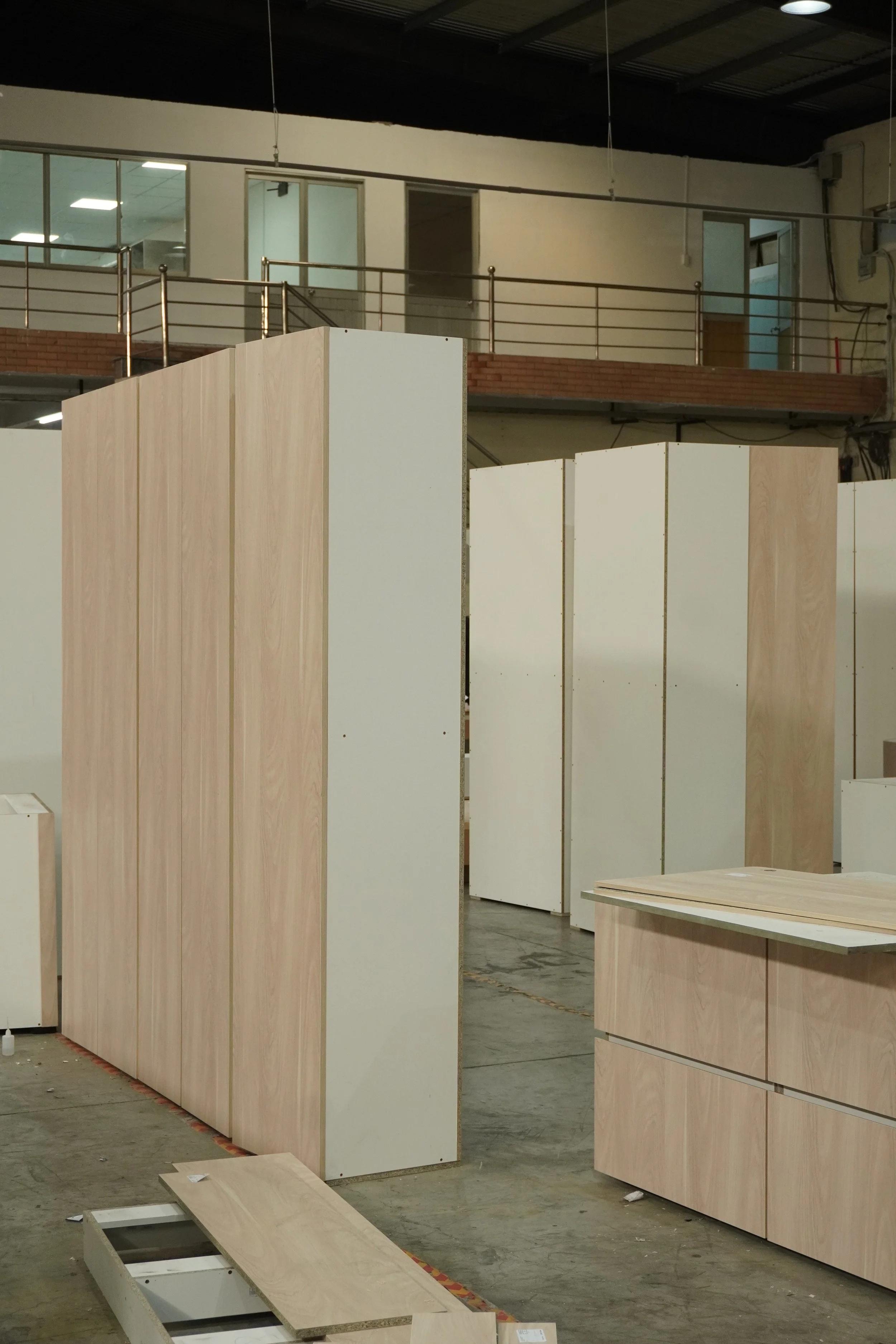
Solid hardwood offers a premium look and, for the right species, excellent natural durability — but it's more expensive and its performance is entirely dependent on getting species selection right for the climate zone. Engineered substrates (finger-jointed timber cores, quality MDF or plywood) are dimensionally more predictable across climate variation and cost less, but are not suitable for external or high-moisture exposure without appropriate coating systems.
For most internal joinery — kitchens, wardrobes, internal doors — the species debate matters less than getting the substrate, coating, and hardware selection right for the specific room's moisture exposure.
Sustainable Sourcing Note
Whichever species you select, chain-of-custody certification (FSC or equivalent) is increasingly required for green building compliance and tender eligibility. See our guide to FSC-certified joinery for Australian tenders for what to check before ordering.
The Bottom Line
There's no universal "best" timber — the right choice is a function of climate zone, exposure (internal vs external), and coating system. Coastal and tropical projects should lean toward naturally durable hardwoods or well-sealed engineered substrates; arid zones benefit from dimensionally stable engineered products; temperate zones have the most flexibility.
Request material samples for your specific project location — we'll recommend species and substrate combinations matched to your climate zone and application.
Get in touch to discuss your next project: