
5 Questions to Ask an Offshore Joinery Manufacturer Before You Sign a Contract
The cost and lead time advantages of offshore joinery are real, but they only materialise if you're working with a manufacturer that has the systems, certifications, and communication processes to deliver reliably to an Australian construction program. Price alone tells you almost nothing about that. These five questions separate manufacturers worth committing to from ones that will cost you more in rework and delay than they saved in freight.
1. Can You Provide Factory Audit Reports or Arrange a Facility Visit?
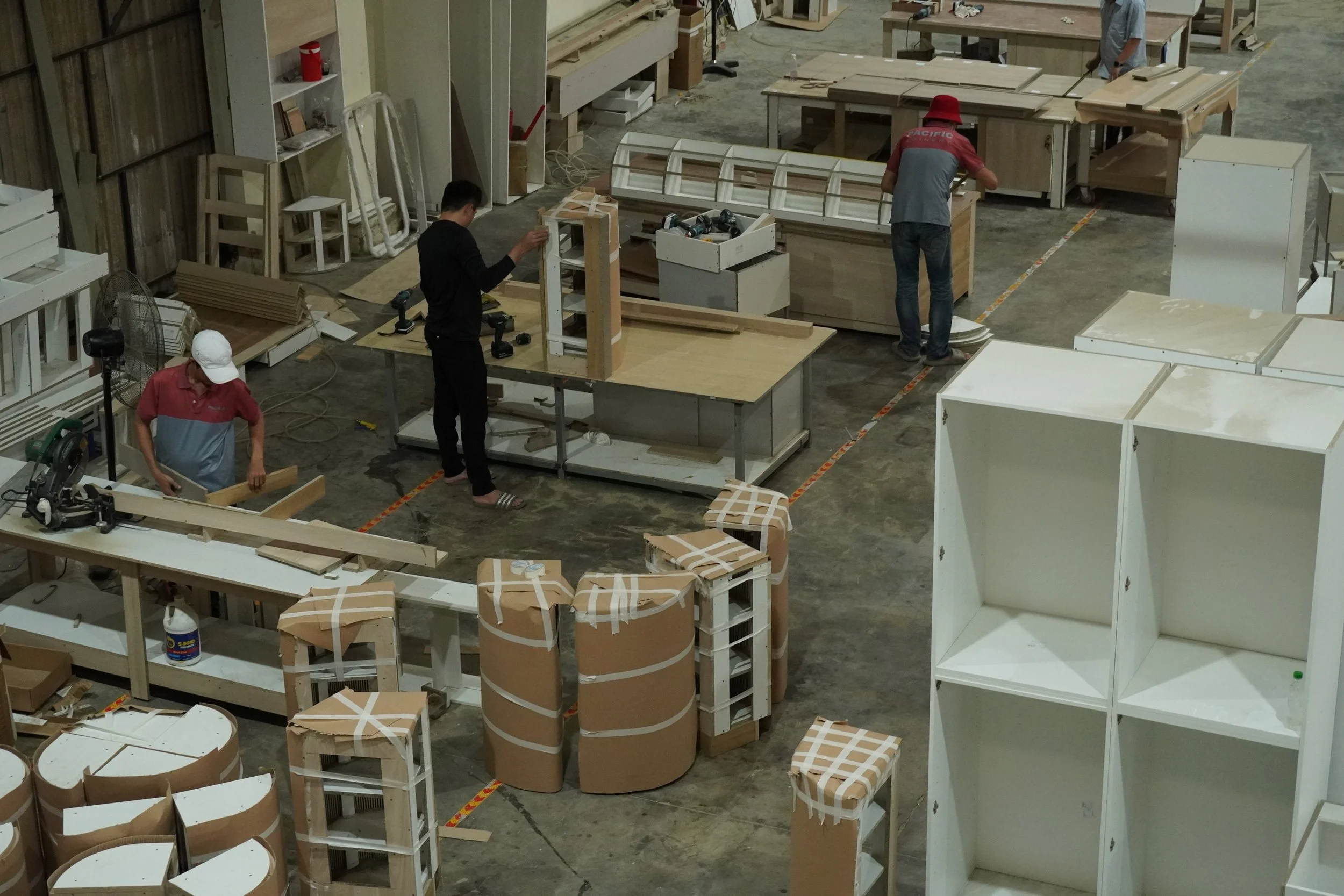
A manufacturer confident in their operation will readily provide recent third-party factory audit reports (covering production capacity, quality systems, and labour compliance) or facilitate a video/in-person facility tour. What to look for:
Independent audit reports — not just the manufacturer's own marketing material, but third-party verification (common audit frameworks include BSCI, Sedex/SMETA, or equivalent)
Production capacity evidence matching your project scale — a factory that primarily runs small custom orders may not have the systems to reliably deliver a 200-unit multi-residential order on schedule
Willingness to show you the actual production floor, not just a showroom — hesitation here is a genuine red flag
2. What Does Your Quality Control Process Look Like, and Can I Inspect Before Shipping?
Ask specifically:
At what production stages does QC happen — ideally in-process (during production) as well as final inspection before packing, not just a final check
What's documented — photo or video documentation of QC checkpoints for larger orders gives you a paper trail if a dispute arises later
Can you arrange a pre-shipment inspection, either by your own representative, a third-party inspection agency, or via detailed video review — this is standard practice for larger orders and a reasonable ask regardless of order size
What happens if a defect is found before shipping — confirm the remediation process (rework on-site at the factory vs. shipping and dealing with it in Australia)
3. What Are Your Warranty and Defect Liability Terms?
Get this in writing before production starts, covering:
Warranty period for materials and workmanship — industry standard is typically 1–2 years for joinery hardware and finish, longer for structural timber components
What triggers a warranty claim and what evidence you need to provide (photos, installation date, usage conditions)
Who bears the cost of a defect discovered after installation in Australia — remediation cost, freight for replacement parts, and labour to reinstall should all be addressed, not just replacement of the product itself
Response time commitments for warranty claims — a manufacturer with a vague or open-ended response time creates program risk if a defect surfaces mid-project
4. What Are Your Payment Terms, and How Do They Manage My Risk?
Payment structure is where a lot of offshore manufacturing risk actually sits. Reasonable, industry-standard terms typically look like:
A deposit (commonly 30–50%) on order confirmation to commence production
A balance payment structured around production milestones or, more protectively, on or after pre-shipment inspection sign-off — avoid terms requiring 100% payment before you've had any opportunity to inspect the product
Clear currency and exchange rate terms if quoting in USD or another foreign currency — confirm whether pricing is fixed or subject to exchange rate adjustment
Escrow or trade assurance options for larger orders, which some manufacturers and trading platforms support — worth asking about for high-value contracts, particularly on a first order with a new supplier
5. How Do You Manage Communication and Project Management Across the Order?
For any order beyond a small, simple specification, ask:
Who is your single point of contact for the duration of the project, and what's their English proficiency and availability relative to Australian business hours
What's the reporting cadence during production — weekly updates are standard for larger or longer-running orders
How are shop drawing revisions and approvals tracked — a clear, documented approval trail (not just email threads) matters if there's ever a dispute about what was actually approved
What's the escalation path if something goes wrong — a named senior contact you can reach beyond your day-to-day project coordinator
Why This Matters Specifically for Australian Builders
Australian builders working with offshore manufacturers face a specific set of risks that don't apply to local sourcing: time zone gaps complicate real-time problem-solving, freight adds weeks of transit where defects can't be caught until arrival, and legal recourse against an overseas manufacturer is far more limited and costly than dealing with a local supplier under Australian Consumer Law. None of this means offshore sourcing is too risky to pursue — it means the due diligence upfront needs to be more rigorous than you'd apply to a local workshop, because the cost of getting it wrong is higher and slower to fix.
The Bottom Line
Price and lead time are the headline numbers, but factory audits, QC process, warranty terms, payment structure, and communication management are what actually determine whether an offshore joinery order arrives on time, on spec, and without disputes. Ask these five questions before signing anything, and treat vague or evasive answers as a genuine warning sign rather than a detail to sort out later.
Book a factory video tour or consultation call — see our production facility, QC process, and discuss terms directly with our project management team before committing to an order.

Get in touch to discuss your next project: