
Aged Care and Healthcare Joinery: Compliance, Safety, and Durability Requirements
Joinery for aged care and healthcare facilities sits under a stricter and more specialised compliance regime than standard residential or commercial work — anti-ligature requirements, infection control finishes, and durability standards for high-frequency institutional use all need to be addressed at the specification stage, not discovered during certification. This guide covers what builders need to brief and check.
Why Aged Care and Healthcare Joinery Is a Different Category
These facilities operate under building classifications (Class 9a for healthcare, Class 9c for aged care under the NCC) with additional requirements beyond standard residential or commercial joinery, driven by resident safety, infection control, and durability under continuous institutional use. Getting the specification wrong isn't just a compliance risk — it's a direct safety and operational risk for the facility.
Anti-Ligature Requirements
Anti-ligature design is most critical in mental health facilities and parts of aged care with dementia or high-dependency units, and typically covers:
Hardware — handles, hinges, and hooks designed to collapse or break away under load rather than support a ligature point
Door and cabinet design — minimising gaps, protrusions, and rigid fixed points that could be used as anchor points
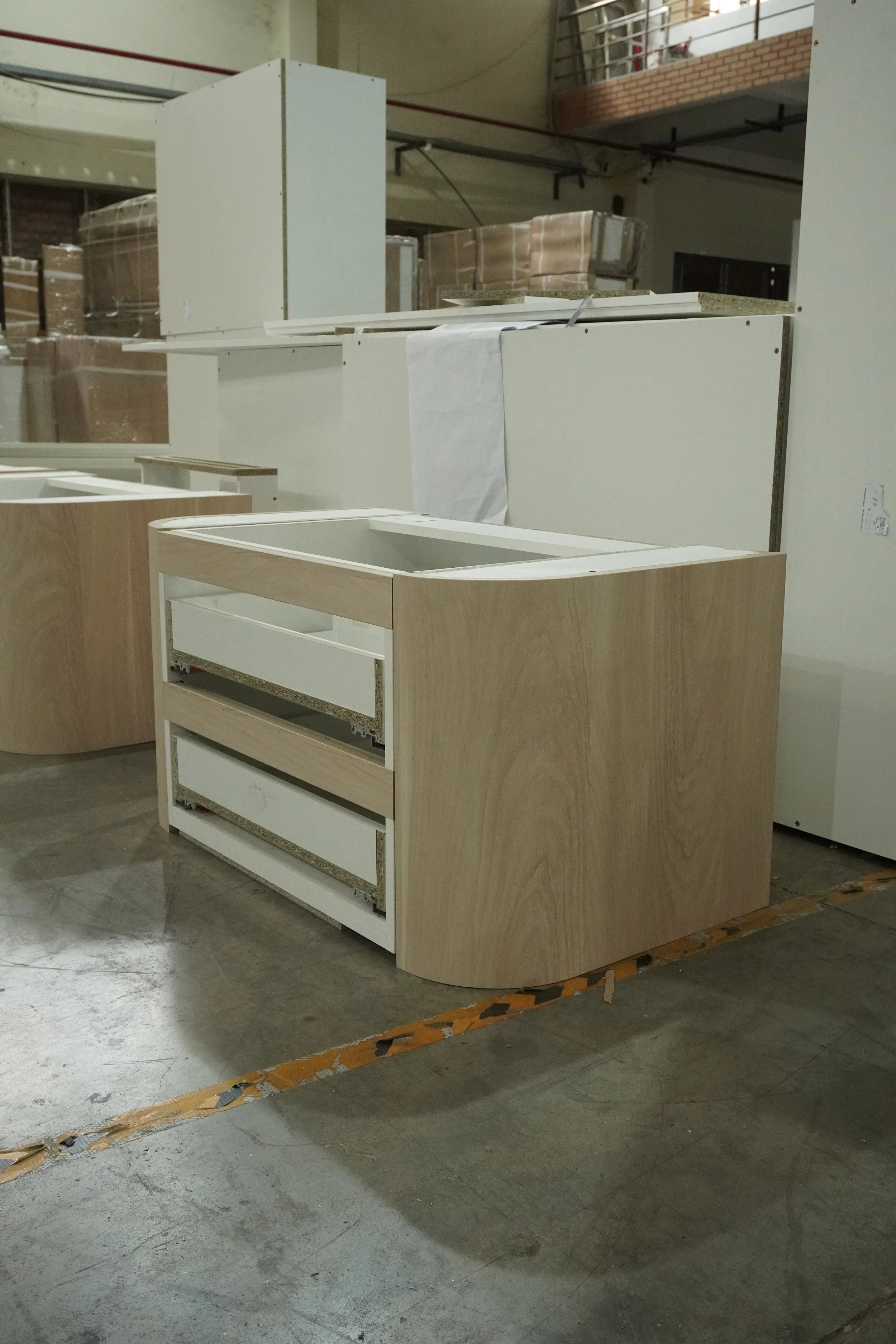
Sloped or rounded tops on cabinetry — reducing ligature risk on top surfaces
Not every aged care facility requires full anti-ligature specification — it depends on the specific care model and resident risk profile, which should be defined by the facility's clinical and safety team, not assumed by the builder. Confirm the required anti-ligature standard (often referenced against state health department design guidelines) before briefing your joinery manufacturer.
Infection Control and Antimicrobial Finishes
Healthcare and aged care joinery needs to support cleaning protocols without degrading over repeated use:
Non-porous, seamless surfaces wherever possible, minimising joints and crevices where bacteria can accumulate
Antimicrobial laminate or coating finishes, increasingly specified for high-touch surfaces (handles, bench edges, bed surrounds)
Chemical resistance — finishes need to withstand hospital-grade disinfectants without discolouring or breaking down over repeated cleaning cycles
Rounded edges and coved skirting junctions where joinery meets walls or floors, to eliminate hard-to-clean corners
Relevant Standards and Guidelines
Beyond the general AS Standards covered in our compliance guide for imported joinery, aged care and healthcare projects typically also reference:
State health department design guidelines — each state (e.g., NSW Health's Health Facility Guidelines) publishes specific requirements for healthcare joinery that go beyond the NCC baseline
AS1428 — accessibility requirements, particularly relevant for door widths, hardware height, and wardrobe/vanity accessibility in aged care
Facility-specific clinical risk assessments — for mental health and high-dependency units, the specific anti-ligature requirement is often set by a clinical risk assessment rather than a generic standard
Material and Hardware Selection
Practical selection guidance for this sector:
Solid, non-porous laminates over timber veneer for high-touch surfaces, given cleaning frequency and chemical exposure
Anti-ligature hardware ranges specifically designed and tested for this purpose — standard commercial hardware should not be substituted without confirming it meets the required breakaway/collapse specification
Durable, commercial-grade hinges and drawer runners rated for high-frequency institutional use, which is a different duty cycle to residential or standard commercial joinery
A Case Example
A regional aged care redevelopment required anti-ligature joinery specification for its dementia care wing, alongside standard finish joinery for independent living units within the same project. Briefing these as two distinct specifications — rather than applying anti-ligature requirements across the whole project by default, or missing them in the dementia wing — meant the project met its clinical risk assessment requirements in the areas that needed it without adding unnecessary cost to the independent living joinery.
The Bottom Line
Aged care and healthcare joinery requires sector-specific specification, not a standard residential or commercial brief with a few extra notes. Anti-ligature and infection-control requirements should be defined by the facility's clinical and safety team early, referenced against relevant state health guidelines, and clearly differentiated by area within larger, mixed-use facilities.
Request our sector-specific spec sheet — covering anti-ligature hardware options, antimicrobial finish choices, and relevant compliance references for aged care and healthcare joinery.
Get in touch to discuss your next project: