
How Packaging Ensures Quality Consistency in Joinery Supply
When discussing quality in joinery manufacturing, most people focus on materials, machinery, and craftsmanship.
However, one of the most overlooked factors is packaging.
In reality, packaging is not just about protection—it is a critical system that ensures consistency from factory production to final installation.
What Does “Quality Consistency” Mean in Joinery?
Quality consistency means that every unit delivered:
Matches approved specifications
Maintains its finish and structure
Performs correctly during installation
Arrives in identical condition across all shipments
Even perfectly manufactured joinery can lose consistency if packaging is not handled correctly.
Why Packaging Directly Impacts Quality
Joinery products are exposed to multiple risks during transport:
Long-distance shipping conditions
Moisture and humidity changes
Movement inside containers
Repeated handling during loading and unloading
Without a structured packaging system, these factors can lead to:
Surface damage
Warping or misalignment
Missing or mixed components
Installation delays
How Packaging Creates Consistency Across Every Shipment
1. Standardized Packaging System
A consistent packaging method ensures that:
Every unit is protected in the same way
Every shipment meets the same standard
There is no variation between batches
This is critical for large-scale projects where repeatability matters.
2. Protection of Surface Finishes
Joinery often includes delicate finishes such as laminates, veneers, or painted surfaces.
Protective layers prevent:
Scratches
Abrasion
Edge chipping
This ensures that visual quality remains consistent across all delivered units.
3. Structural Stability During Transit
Reinforced packaging maintains the shape and integrity of each unit by:
Preventing movement
Supporting weight distribution
Reducing impact stress
This is especially important for long international shipping routes.
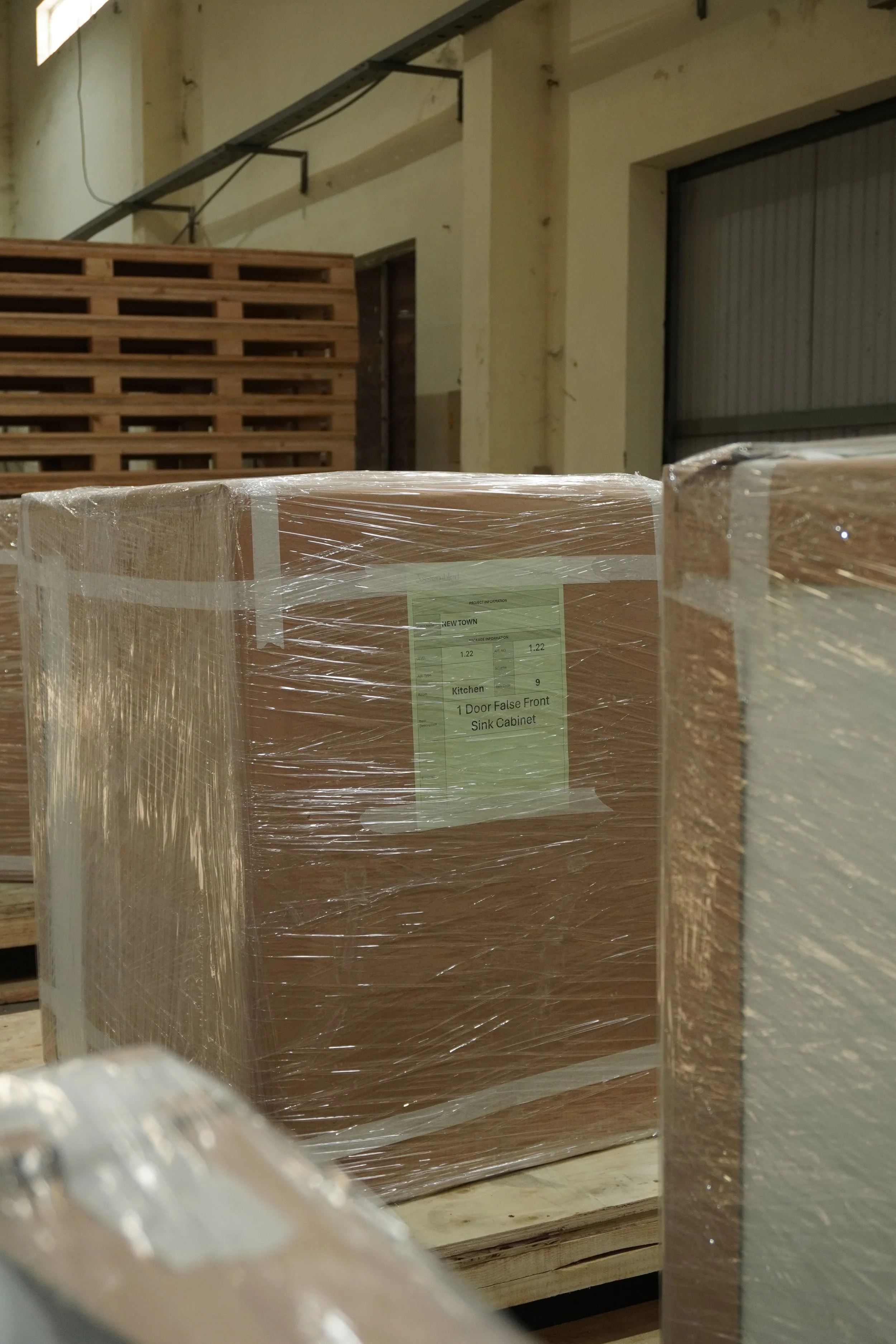
4. Organized Component Grouping
Packaging systems group components logically by:
Unit
Area
Installation sequence
This prevents:
Missing parts
Mixed components
On-site confusion
👉 Result: smoother, more consistent installation outcomes.
5. Reduced Handling Risk
Well-designed packaging minimizes the need for repacking or excessive handling.
Less handling leads to:
Lower risk of damage
Faster site processing
More predictable project timelines
Consistency Across Global Projects
For international joinery supply, consistency must be maintained across:
Multiple containers
Multiple production batches
Long shipping durations
A strong packaging system ensures that:
👉 What leaves the factory is exactly what arrives on-site.
The Link Between Packaging and Installation Efficiency
Consistent packaging leads to:
Faster unpacking
Easier identification of components
Reduced installation errors
This directly impacts:
Labor efficiency
Project timelines
Overall project cost
Sustainability and Consistency Can Work Together
Modern packaging systems can achieve both:
Environmental responsibility (recyclable materials)
High-level protection and consistency
This balance is essential for future-focused construction projects.

Get in touch to discuss your next project: